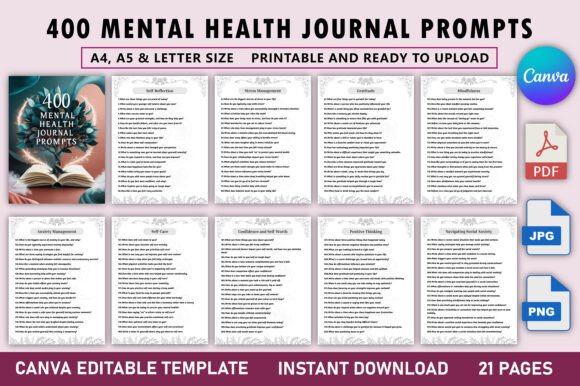
400 Mental Health Journal Prompts: A Practical Tool for Self-Exploration and Growth
In today’s fast-paced world, maintaining mental well-being is essential for productivity, creativity, and overall life satisfaction. 400 Mental Health Journal Prompts offers a structured yet flexible approach to self-reflection, making it a valuable addition to any daily routine or professional workflow. Whether you're managing stress, building resilience, or exploring personal goals, this resource provides actionable prompts that align with real-world needs.
Understanding the Role of 400 Mental Health Journal Prompts
At its core, 400 Mental Health Journal Prompts serves as a guide for introspection and emotional clarity. It helps users navigate complex emotions, track progress, and identify patterns in their thoughts and behaviors. This makes it particularly useful in scenarios where decision-making, self-awareness, or emotional regulation is key—such as during project planning, creative development, or navigating challenging interpersonal dynamics.
The prompts are designed to be adaptable, allowing users to integrate them into their existing routines without disrupting workflow. Whether used before starting a task to set intentions, during a project to maintain focus, or after completing a goal to reflect on outcomes, these prompts support continuous improvement and mindfulness.
Using 400 Mental Health Journal Prompts in Daily Workflows
For professionals and creatives, incorporating journaling into daily routines can enhance productivity and reduce burnout. Here’s how 400 Mental Health Journal Prompts can fit into different stages of a workflow:
- Before a Project: Use prompts focused on intention-setting, such as “What do I hope to achieve with this project?” or “What challenges might I face, and how can I prepare for them?” These questions help establish a clear mindset and proactive approach.
- During a Task: Incorporate prompts that encourage mindfulness, like “What am I feeling right now?” or “Am I staying focused on my goal?” These moments of reflection can prevent distractions and maintain momentum.
- After a Decision: Reflect on outcomes with prompts like “What did I learn from this choice?” or “How did my emotions influence my actions?” This helps build better judgment and emotional intelligence over time.
Integration with Other Tools and Resources
400 Mental Health Journal Prompts works well alongside other productivity and wellness tools. For example, it pairs effectively with habit-tracking apps, meditation platforms, or digital planners. Users can use the prompts to supplement their existing systems, adding a layer of emotional awareness to their structured routines.
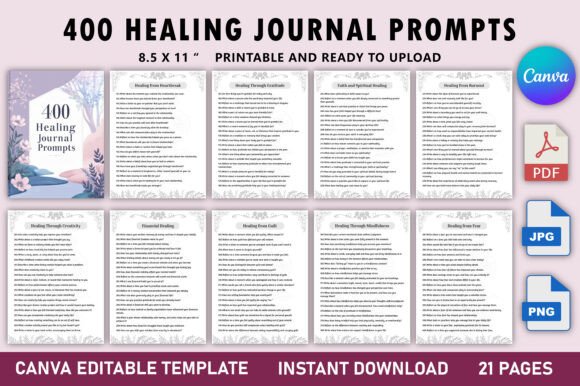
When combined with Canva-editable templates, the prompts become even more versatile. The ability to customize layouts, add visual elements, or organize content by theme allows for a more personalized experience. This makes it ideal for those who prefer a blend of text-based reflection and visual organization.
Practical Implementation Tips
To get the most out of 400 Mental Health Journal Prompts, consider the following strategies:
- Set a Regular Schedule: Dedicate 10–15 minutes each day to journaling. Consistency builds habits and reinforces long-term benefits.
- Customize Your Approach: Choose prompts that align with your current goals or challenges. For instance, if you’re working on improving relationships, focus on prompts related to communication and empathy.
- Combine with Other Practices: Pair journaling with mindfulness exercises, physical activity, or social interactions to create a holistic wellness routine.
- Review and Reflect: Periodically revisit past entries to track progress and identify recurring themes. This helps reinforce growth and self-awareness.
Workflow Examples and Use Cases
Here are a few examples of how 400 Mental Health Journal Prompts can be applied in different contexts:
- Entrepreneurs: Use prompts to assess business decisions, manage stress, and maintain a positive mindset. Questions like “What am I grateful for in my business journey?” or “How can I improve my leadership skills?” foster resilience and clarity.
- Freelancers: Reflect on client interactions, project deadlines, and work-life balance. Prompts such as “What boundaries do I need to set?” or “How can I stay motivated during slow periods?” support sustainable practices.
- Students and Learners: Apply prompts to track academic progress, manage anxiety, and develop a growth mindset. Questions like “What did I learn today?” or “How can I improve my study habits?” encourage continuous learning.
- Professionals in High-Stress Roles: Use prompts to process emotions, manage workload, and prioritize self-care. For example, “What small step can I take to relax today?” or “How can I reframe this challenge as an opportunity?”
Factors to Consider for Long-Term Use
While 400 Mental Health Journal Prompts is a powerful tool, its effectiveness depends on several factors:
- Preparation: Before starting, understand your goals and what you hope to gain from journaling. This ensures the prompts are relevant and meaningful.
- Compatibility: Ensure the format (A4, A5, US Letter) suits your preferred method of use, whether digital or physical. Canva-editable files offer flexibility for customization.
- Usability: Keep the journal accessible and easy to use. A clutter-free layout and organized structure make it more likely to be used consistently.
- Organization: Group prompts by theme or purpose to streamline the process. For example, separate sections for gratitude, stress management, and personal growth.
- Efficiency: Focus on quality over quantity. Even a few well-chosen prompts can lead to significant insights and improvements.
Conclusion: A Sustainable Path to Mental Well-Being
400 Mental Health Journal Prompts is more than just a collection of questions—it’s a practical framework for fostering self-awareness, emotional resilience, and personal growth. By integrating these prompts into daily routines, users can create a sustainable practice that supports both mental health and professional success. Whether used alone or in combination with other tools, this resource offers a thoughtful way to navigate life’s challenges and opportunities. With its customizable design and diverse range of topics, it adapts to individual needs, making it a valuable asset for anyone committed to self-improvement.