Mileage Logbook: A Practical Tool for Tracking and Managing Your Business Expenses
In the world of business, especially for those who rely on vehicles for their daily operations, keeping track of mileage is more than just a formality—it's a necessity. A Mileage Logbook serves as a detailed record of all vehicle usage, providing valuable insights into fuel consumption, travel costs, and overall efficiency. Whether you're a small business owner, a freelancer, or a self-employed professional, maintaining an accurate mileage log can have a significant impact on your financial management and tax deductions.
For many, the challenge lies in consistently recording every trip, ensuring accuracy, and organizing data in a way that is both accessible and useful. This is where a well-structured Mileage Logbook comes into play, offering a solution that simplifies the process and helps users stay on top of their expenses.
The Importance of a Mileage Logbook
A Mileage Logbook is more than just a notebook or spreadsheet; it's a strategic tool that can help you manage your business finances effectively. By tracking every mile driven, you can accurately calculate the portion of your vehicle expenses that are deductible for tax purposes. This includes fuel, maintenance, insurance, and depreciation. Without a proper log, it's easy to overestimate or underestimate these costs, which can lead to inaccurate financial reporting and potential issues with tax authorities.
Moreover, a Mileage Logbook can also serve as proof of business-related travel, which is essential if you ever need to justify your expenses during an audit. It provides a clear and organized record that supports your claims and ensures compliance with regulatory requirements.
Challenges and Goals Associated with Mileage Tracking
Many individuals struggle with the consistency and accuracy required for effective mileage tracking. Common challenges include forgetting to record trips, misclassifying business versus personal use, and failing to maintain up-to-date records. These issues can lead to errors in expense calculations and missed opportunities for tax savings.
For those aiming to improve their financial management, the goal is often to create a system that is both reliable and user-friendly. This might involve finding a logbook format that suits their workflow, integrating it with other financial tools, or adopting digital solutions that automate the process. The right approach can make a significant difference in how efficiently and effectively mileage is tracked.
How a Mileage Logbook Can Help Address These Challenges
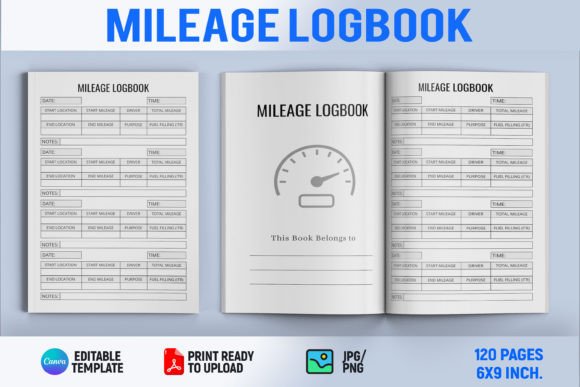
A well-designed Mileage Logbook offers a structured way to record and categorize each trip, making it easier to monitor business-related driving. By using a standardized format, users can ensure that all necessary details—such as date, destination, purpose, and distance—are captured consistently. This level of detail not only improves accuracy but also streamlines the process of calculating tax-deductible expenses.
Additionally, a Mileage Logbook can be customized to fit individual needs. Some users may prefer a simple paper-based log, while others may opt for digital templates that allow for automatic calculations and data export. The key is to choose a method that aligns with your workflow and makes it easy to stay on top of your records.
Practical Applications and Outcomes
The benefits of using a Mileage Logbook extend beyond just tax deductions. For example, it can help identify patterns in vehicle usage, such as frequent trips to specific locations or periods of high fuel consumption. This information can be used to optimize routes, reduce unnecessary travel, and ultimately lower operating costs.
Consider a freelance graphic designer who frequently travels to meet clients. By maintaining a Mileage Logbook, they can accurately track the miles driven for each project and allocate the associated costs accordingly. This not only ensures that their expenses are properly accounted for but also provides a clearer picture of the profitability of each client engagement.
Another practical application is in the context of business partnerships or shared vehicles. A Mileage Logbook can help distribute costs fairly among multiple users, ensuring transparency and accountability. This is particularly useful for businesses that operate multiple vehicles or have employees who use company cars for work-related travel.
Examples, Recommendations, and Useful Considerations
When selecting a Mileage Logbook, it's important to consider factors such as ease of use, customization options, and compatibility with other tools. For instance, some digital logbooks integrate with accounting software, allowing for seamless data transfer and real-time updates. Others offer mobile apps that make it easy to log trips on the go.
One recommendation is to use a template that includes fields for essential information, such as the date of the trip, starting and ending odometer readings, destination, purpose, and total miles driven. This structure ensures that all necessary data is captured consistently and can be easily reviewed at a later date.
It's also worth noting that different users may approach mileage tracking in unique ways. For example, a small business owner may prefer a detailed log that includes notes on each trip, while a part-time contractor might opt for a simpler format that focuses on key metrics. The key is to find a method that works for your specific needs and lifestyle.
Finally, it's important to review your Mileage Logbook regularly to ensure accuracy and completeness. This can help identify any discrepancies or missing entries, allowing you to correct them before they become a problem. By staying proactive, you can maximize the benefits of your logbook and make informed decisions about your business finances.